
Carbon neutral vs net zero vs carbon negative: what’s the difference?
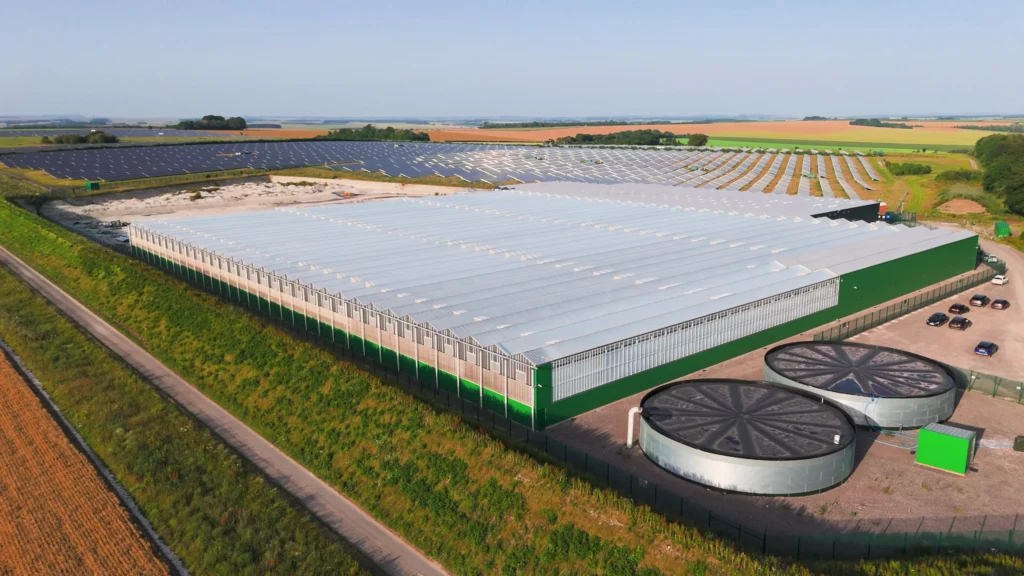
Carbon neutral vs net zero vs carbon negative. The difference is how far each goes. Carbon neutral balances emissions, usually through carbon offsets. Net zero cuts emissions across a business’s full value chain and usually offsets the small remainder. Carbon negative goes beyond zero, removing more greenhouse gas than the business emits. Each represents a bigger climate commitment than the last. Glass Pharms® grows medical cannabis in what is, by design, the world’s first carbon-negative cultivation facility of its kind.
Three terms, with three very different meanings, and a level of confusion between them.
Key takeaways
- Carbon neutral usually balances emissions through offsets and does not necessarily require a business to reduce its own emissions.
- Net zero prioritises deep emissions reductions across the entire value chain before addressing the small remainder.
- Carbon negative goes further by removing more greenhouse gas than the business emits.
- Glass Pharms was designed to operate without carbon offsets, using energy generated from food waste to power its cultivation facility.
Carbon neutral vs net zero vs carbon negative, explained
The terms carbon neutral, net zero, and carbon negative are not interchangeable, though they are often treated as if they were. We are here to explain the main differences, along with the more nuanced details that are sometimes glossed over.
| Category | Carbon neutral | Net zero | Carbon negative |
| The goal | Balance emissions so they add up to zero | Reduce emissions as much as possible, then remove the remainder | Remove more greenhouse gases than are emitted |
| How it’s done | Mostly through carbon offsets | Prioritise emission reductions, then offset unavoidable emissions | Fix carbon or use technology with net negative CO2e |
| What it covers | Usually direct operations and purchased energy | The entire value chain of a business, from supply, through logistics, to customers | The entire value chain of a business, from supply, through logistics, to customers |
| Level of ambition | Lowest | High | Highest |
| Example | A business purchasing offsets to balance its annual emissions | A manufacturer reducing emissions across its operations and supply chain before offsetting the remainder | Glass Pharms medical cannabis cultivation facility |
What does carbon neutral mean?
Carbon neutral means that a company or business is trying to balance out the emissions it produces, usually by buying carbon offsets: credits that fund things like reforestation or renewable energy elsewhere. For every tonne of CO2e you release, you pay for a tonne to be absorbed or avoided somewhere else, and the two are meant to cancel out.
And this comes with a few caveats…
- Carbon neutrality is usually measured year by year.
- It tends to count only carbon dioxide rather than the full range of greenhouse gases, and it generally covers a company’s own operations and the energy it buys, while leaving the wider supply chain out of the picture.
- Being carbon neutral does not actually require a company to reduce its own emissions at all. It can carry on much as before, as long as it buys enough offsets to match what it releases.
What is net zero, and how is it different?
Net zero means reducing a business’s greenhouse gas emissions as close to zero as possible, then removing or offsetting only the small amount that genuinely cannot be cut. Where carbon neutral is about ‘balancing the books’, net zero is about changing how a business actually operates.
- Under the recognised standard, set by the Science Based Targets initiative (SBTi), that means reducing emissions by somewhere around 90 to 95%, before then looking at carbon offset options for the remaining 5 to 10%.
- Being classed as net zero means the business must also account for all greenhouse gases, not just carbon dioxide, so the likes of methane and nitrous oxide are counted too.
- It also spans the business’s entire value chain, covering not just their own operations but also the environmental impact of suppliers and customers. This is what makes net zero so much harder to earn than carbon neutrality: there is nowhere to hide the emissions you would rather not count.
What is carbon negative?
Carbon negative means removing more greenhouse gas than you emit.
Each step asks more of a business than the last. A carbon neutral business offsets its emissions, a net zero business cuts them to almost nothing (and then offsets the rest), but a carbon negative business goes one better, removing more greenhouse gases than it produces.
- The net effect is below-zero emissions, which is why you may have also seen it called ‘climate positive’.
- It is a genuinely high bar, and very few organisations are truly carbon negative, as it cannot usually be reached by simply buying offsets.
- It really does depend on how the business is built in the first place – on where the business actually sources its energy.
How Glass Pharms became carbon negative
Glass Pharms did not ‘become’ carbon negative. It always was.
The driving force behind Glass Pharms’ design was always to become the world’s very first carbon-negative medical cannabis cultivator, and to get there by building sustainability into the foundations rather than trying to offset such a huge operation.
- Alongside our glasshouse, we have an anaerobic digestion plant that turns food waste into all the clean energy the facility needs, which is what puts us beyond carbon neutral and into carbon negative. We do not pull any energy for our glasshouse facility from the National Grid, but rather directly from our super-green source.
- Diverting that waste is what tips us below zero. By capturing emissions that would have happened anyway and turning them into clean energy, the balance ends up negative rather than simply neutral. The waste food would rot to methane, CH4, 28 times more potent than CO2. Every biomethane molecule converted saves 27 CO2e.
- The claim comes from how we operate, not what we buy. There are no offsets propping this up. Our carbon-negative position is a product of the way the facility makes its own energy.
We break down exactly how the process works, from food waste to clean power, in our guide to Glass Pharms’ off-grid glasshouse cultivation facility.

Why are these definitions so important?
Up until quite recently, these terms were mostly marketing buzzwords, used loosely, rarely challenged, and for the most part, not fully understood by the wider public. That is changing quickly, and the distinction between them will soon come with legal implications, rather than just reputational ones.
- From September 2026, the EU will ban offset-based ‘carbon neutral’ claims on consumer products, treating them as a misleading commercial practice under its Empowering Consumers for the Green Transition Directive. The big shift is that businesses will not be able to claim that a product is carbon neutral simply because it has bought offsets to match the emissions.
- In the UK, the Competition and Markets Authority and the Advertising Standards Authority are moving the same way, cracking down on vague or unsubstantiated environmental claims, with the CMA now able to fine businesses directly for greenwashing.
- The recognised standard has tightened too: ISO 14068-1 replaced the older PAS 2060 on 1 January 2025, and increasingly these claims need genuine third-party verification rather than a company’s own say-so.
What about carbon zero, climate neutral and climate positive?
Carbon zero (or ‘zero emissions’)
Carbon zero means producing no emissions at all, rather than balancing or removing them. It is the most absolute of the terms and by far the hardest to achieve, which is why, for most businesses, it remains more of an aspiration than a reality.
Climate neutral
Climate neutral is a slightly broader cousin of carbon neutral. Where carbon neutral deals only with carbon dioxide, climate neutral accounts for all greenhouse gases, and often a business’s wider environmental impact too. Useful in principle, but rarely used in the real world.
Climate positive (or ‘carbon positive’)
These both essentially mean the same as carbon negative: removing more greenhouse gas than you emit. That said, the naming is somewhat confusing, as ‘positive’ is used here instead of the more common ‘negative’. The two words point at the same thing from different angles: negative in terms of the emissions figure, positive in terms of the outcome for the environment.
Common questions on climate terms
Are any countries carbon negative?
Yes, but only a handful of countries actually remove more greenhouse emissions than they produce. Bhutan was the first, thanks mostly to the fact the country is covered in healthy, dense forestation and the hydropower it exports. Panama and Suriname are the other two that make up the current list. All of them rely heavily on vast natural carbon sinks, which is far harder for a single company to replicate.
Which is better, carbon neutral or net zero?
Net zero is the more rigorous of the two, because it demands real emissions cuts rather than letting a business offset its way to a balance. That said, both are good for the environment, and shouldn’t be ‘pitted’ against each other.
Carbon neutrality can be reached fairly quickly and works as a sensible first step, while net zero is the more rigorous, longer-term goal a business should be trying to reach over time.
Can a business actually be carbon negative?
Yes, and we are proof of that! While it is still quite rare, and definitely not easy (or cheap) to properly achieve, it is entirely possible.
For most businesses, it comes down to how they are built, above all where their energy comes from, rather than how many offsets they can buy. Because we power our glasshouse with clean energy generated from food waste, we remove more greenhouse gas than we emit, without any need for offsets.
Getting climate claims right
It was only a few short decades back that the idea of a business needing to account for its greenhouse emissions, prove any credentials, or justify an environmental claim was almost unheard of. In 2026, that has now changed completely, and getting the language right is no longer just a point of contention, but a legal requirement.
The thread running through all three terms is actually fairly simple. Carbon neutral balances the books, often with offsets. Net zero demands real cuts before anything is offset. Carbon negative goes further again, taking more out of the atmosphere than it puts in. What separates a claim that holds up from one that does not is whether it rests on genuine reductions or on offsets bought after the fact.
That is exactly how we envisioned Glass Pharms, and how we ultimately built it: carbon-negative by design, not by offsets. As the rules tighten and regulatory oversight/scrutiny grows, that is a distinction we are glad to have built into our foundations.
Share this post: