How Glass Pharms® grows medical cannabis off-grid, powered by food waste
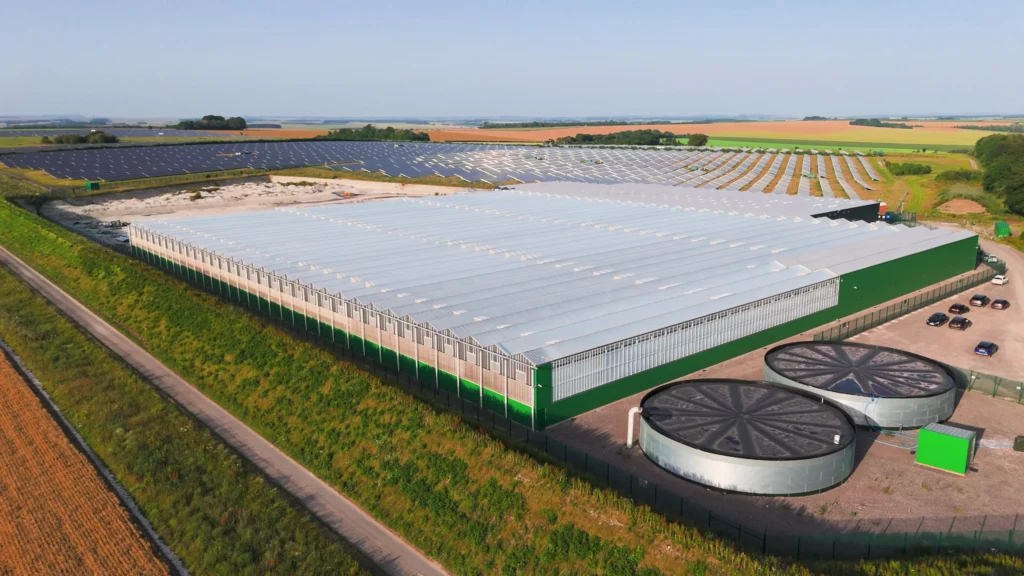
Glass Pharms is the first UK medical cannabis cultivation facility growing off-grid, powered by energy produced through processing food waste. Our glasshouse takes its energy from a co-located anaerobic digestion plant, which converts waste (that would otherwise rot in landfill) into clean power for our crop.
Since we first envisioned Glass Pharms, we were driven by a simple principle: that medical cannabis could be grown cleanly, sustainably, and without reliance on the national grid. For us, that starts with the contents of the nation’s food bins.
Our UK-patented glasshouse runs off-grid, powered by an anaerobic digestion plant (that neighbors the glasshouse itself) and turns food waste into energy. It is why ours is the world’s first carbon-negative cannabis cultivation facility, not due to any offsets, but because of how we produce the energy we need in the first place.
What does it mean to power a cannabis cultivation facility with food waste?
When we say our facility runs off-grid, we mean it in the most literal of terms. We are not drawing electricity from the national grid and then topping up with something green to balance the eco-books.
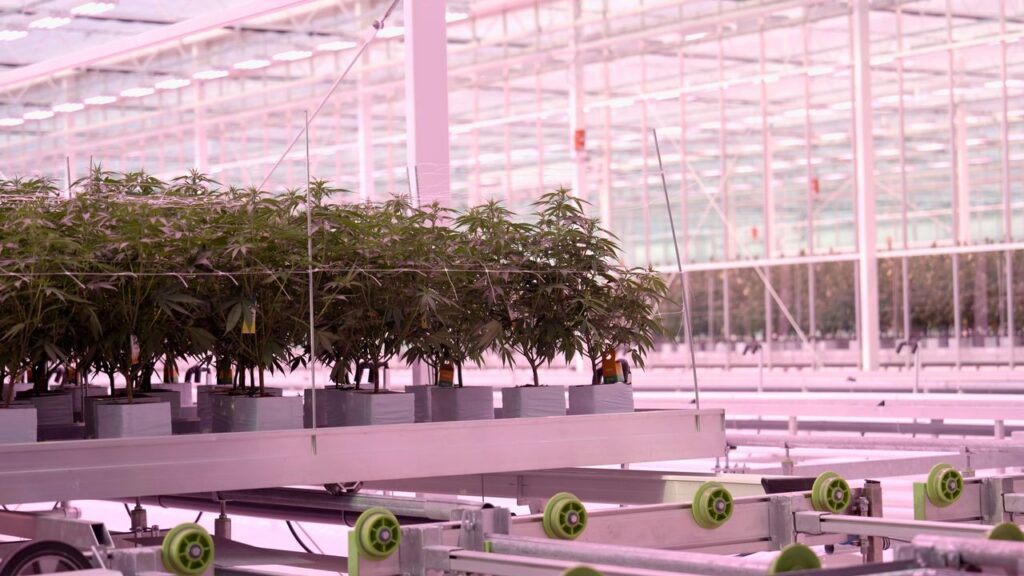
All of the power we use in our highly automated glasshouse facility comes directly from food waste that would usually just end up going to… waste.
Here is the idea in plain terms.
Food waste that ends up in landfill rots and releases a surprising amount of methane, which is many times more potent as a greenhouse gas than carbon dioxide. By capturing that food waste and running it through a digester instead, we put it to work. The digester breaks the waste down and produces biogas, which is used in a Combined Heat and Power (CHP) unit to generate the electricity that powers the glasshouse. The captured heat and energy handle hot water, heating and cooling across the facility. That gives us all the clean energy we need to keep our facility chugging along 24 hours a day, 7 days a week.
| What goes in | What happens | What we get out |
| Food waste | Diverted from landfill into the digester next door | Methane kept out of the atmosphere |
| Biogas | Burned to generate power for the glasshouse | Off-grid electricity, no grid reliance |
| Excess heat | Captured from the energy process | Heating and cooling for the growing environment |
| CO2 | Captured from the same process | Assimilated by the plants to support photosynthesis and growth |
| Digestate | Left over after digestion | Natural soil improver for neighbouring fields |
This is the heart of why Glass Pharms is carbon-negative, and fully off-grid.
The numbers behind Glass Pharms’ off-grid cannabis production
Us Brits throw away A LOT of food every year.
Far too much.
By diverting that waste into the digester rather than letting it slip off to the landfill, it prevents that potent methane from reaching the atmosphere, instead generating power we would otherwise have to buy in.
The numbers behind it:
- An average of 9.5 million tonnes of food is sent to landfill in the UK each year
- Around 40% of the light our plants need comes directly from the sun, with the rest supplemented only as required by our off-grid system.
- Due to our next-generation glasshouse design, we use 60% less energy than a conventional indoor cannabis cultivation facility.
Why domestic, off-grid medical cannabis cultivation matters for UK supply (and demand)
UK demand for medical cannabis has grown at a remarkable pace, especially in the past four or so years.
The volume of flower prescribed to patients rose by 262% between 2022 and 2024, and has continued an almost exponential climb since, with an estimated 80,000 patients receiving treatment through the UK’s private system by the end of 2025. The UK is now the second-largest medical cannabis market in Europe.
The demand is rising fast, and the pace at which the sector is growing is showing zero signs of slowing any time soon.
But the supply, historically, has come from elsewhere.
Up until February 2025, when Glass Pharms first started to supply UK medical cannabis patients with domestically grown cultivars, ALL the medical cannabis prescribed in the UK was imported, often flown halfway around the world before reaching a pharmacy. And in mid 2026, the overwhelming majority of the medical cannabis strains offered to UK patients is, unfortunately, still sourced from other countries. This equals longer lead times, a much heavier carbon footprint, and a supply chain exposed to every delay and shortage along the way.
We entered the UK medical cannabis landscape to change that.
As the first UK company granted a commercial licence to supply high-THC cannabis flower to lawful third parties, and the first to supply domestically grown flower to UK patients, we offer manufacturers, clinics, pharmacies, and patients a dependable home-grown source of high-grade medical cannabis flower that does not need to be air-freighted in. Fresher, more consistent flower, from a supply chain that is shorter, cleaner, and can actually be relied upon.
For a market growing this quickly, that combination of security of supply and genuine sustainability is the foundation the UK’s medical cannabis industry needs to stand on.
The future of UK medical cannabis is home-grown with Glass Pharms
Off-grid, food-waste-powered cultivation is not a gimmick bolted onto how we grow. It is the foundation of it, the core of our ethos. As UK demand keeps climbing, the question facing the industry is not just how much medical cannabis we can produce, but how responsibly we can produce it.
At Glass Pharms, we have built our answer into the facility itself.
For all enquiries, please feel free to reach out anytime.
Disclaimer: Medical cannabis is not suitable for all patients, is a second-line treatment option, and must be prescribed by a clinician listed on the GMC Specialist Register in the UK. This article is for general information only.
Share this post: