The Glass Pharms® post-harvest process explained
The quality of medical cannabis flower prescribed to patients in the UK is not determined by the cultivation process alone. Once the crop is harvested, it moves through a carefully managed post-harvest process that includes deleafing, manual quality checks, drying, curing, and finally storage before being delivered to pharmacies across the country.
At Glass Pharms®, we treat the post-harvest process as just one part of our wider cultivation system, all informed and monitored through the same data-led approach that guides each crop from propagation through harvest.
Glass Pharms’ UK medical cannabis flower is never freeze-dried.
Post-harvest handling starts before the crop is cut
The post-harvest process is planned long before harvest day comes around. The cultivar being grown, its expected flower structure, the cultivation environment, and the planned harvest window all inform when the post-harvest period begins, and also how the flower will be handled once it leaves the glasshouse.
At Glass Pharms, these decisions sit within our pharma-grade cultivation approach, which links the crop’s growth period to the post-harvest process that follows.
Harvest day marks the handover from the growing environment to our controlled post-harvest system. From that point, the flower is handled through a series of carefully managed and monitored stages designed to ensure UK patients are prescribed (and receive) the best domestically grown flower possible.
What happens to Glass Pharms’ medical cannabis flower immediately after harvest?
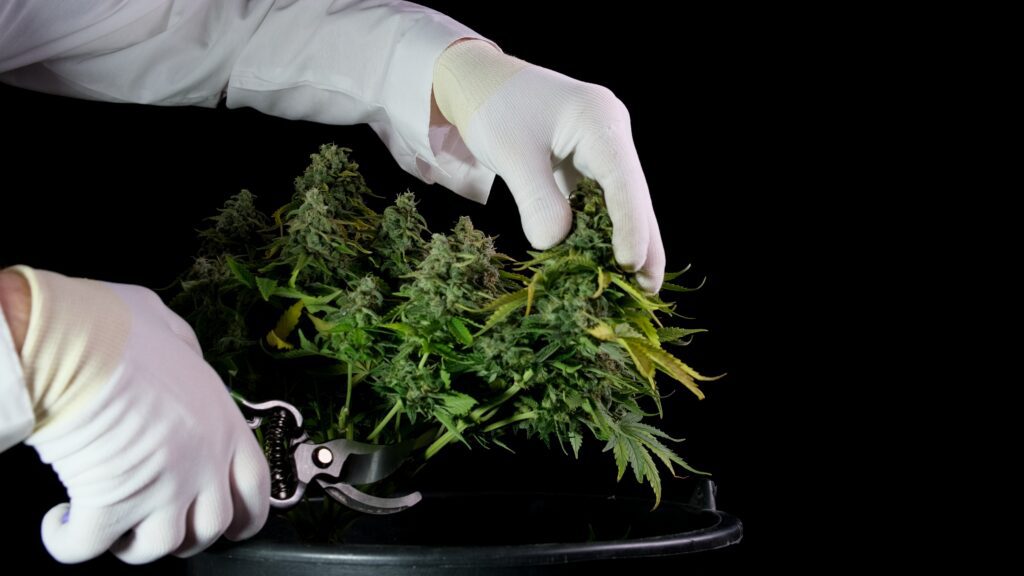
All of our UK-cultivated medical cannabis flower is harvested in five-kilogram batches, rather than being treated as one large, bulk post-harvest event. This is done so the cultivation team has the time and physical control to handle and inspect each batch carefully as it leaves our state-of-the-art glasshouse.
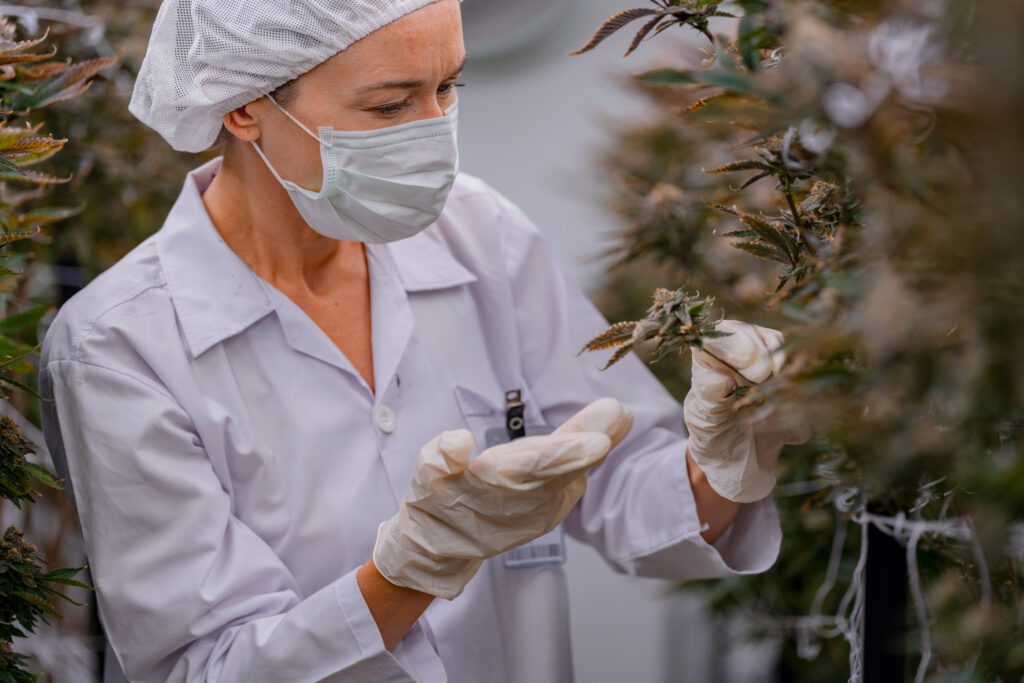
Each flower is then de-leafed and assessed manually. This is an important part of our process, as controlled cultivation creates the conditions for a consistent crop, but there is still high value in having experts inspect the physical condition of every flower before it moves into the drying area.
Harvesting our cultivars in five-kilogram batches also helps keep the post-harvest process measured and deliberate. Each and every batch moves through the same sequence of de-leafing, manual checks, drying, curing, storage, and then dispatch to pharmacies rather than being rushed from the cultivation room to patients’ doorsteps.
How does Glass Pharms dry medical cannabis flower?
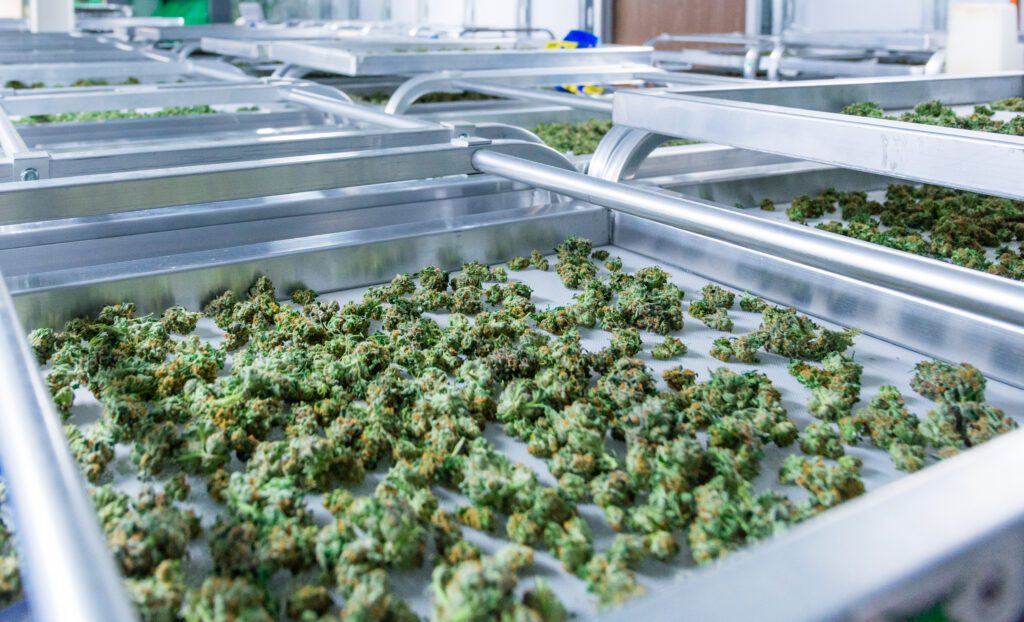
Once de-leafed and quality-inspected, the first major post-harvest stage is drying the flowers. Here, we carefully and methodically reduce the active water within the flower while maintaining the integrity of the cannabinoid and terpene profile developed during cultivation.
Glass Pharms evaluated the established drying methods before we developed our own approach.
- Conventional hang-drying, which is considered the industry standard, can produce good results when conditions are carefully managed, but it relies heavily on room conditions and elapsed time.
- Freeze-drying offers a much faster route and is widely used by producers who grow cannabis flower destined to be processed into extracts, rather than the flower itself being the final product.
Controlled water-activity drying is the approach we settled on at Glass Pharms. We manage drying to an upper aw limit of 0.60, giving the cultivation team closer control over the water available within the flower and the point at which each harvest unit is ready for curing.
Water activity is not the same as total moisture content. It measures the water available within the flower for microbial growth and chemical reactions, making it a more useful indicator of drying progress than visual checks alone. The aim is to carefully reduce the water available, which also lowers any chance of unwanted microbial growth without drying the flowers so aggressively that we risk cannabinoid and terpene degradation.
It is a narrow operating window, but one that we are very strict about. The impact on the final product makes the extra effort worthwhile.
- Aw too high (>0.62): the remaining available water can create favorable conditions for mould growth.
- Aw too low (<0.55): the flower can become overly dry and brittle. This may affect trichome integrity and the terpene profile developed during cultivation.
Why is curing a separate stage from drying?
Because they are two totally separate steps in the cannabis post-harvest process, with very different roles to play in the final quality of our medical cannabis products.
Although drying and curing are far too often explained as essentially being the same thing, they are totally different processes. Drying reduces the water available within the flower, while curing is a slower, gentler stage that follows once drying is complete.
At Glass Pharms, curing is sensor-monitored, so the team has constant oversight of the progress of each harvested batch. For most cultivars, this takes between two and three weeks, although some batches will require a longer curing period. It’s important to keep in mind that medical cannabis is a natural product working towards a pharmaceutical standard, rather than something that arrives in exactly the same condition on a fixed timetable, batch after batch.
As the flower moves through the curing period, moisture continues to stabilise while naturally occurring enzymatic processes run their course. This helps the flower settle into a more consistent final condition. Curing is also important for the terpene profile, as slow, carefully controlled conditions give the flower time to mature without the more abrupt changes associated with aggressive drying.
Freeze-drying is not part of the Glass Pharms post-harvest process
Here at Glass Pharms, we never freeze-dry our medical cannabis flower, and we never have. From harvest through drying and curing, we believe patients and prescribers should have clear information about how their medicine is produced.
We grow our medical cannabis to be prescribed directly to UK patients in flower form. That is why our post-harvest process is built around carefully drying and then curing the flower, rather than freeze-drying it.
Why do some cannabis producers freeze-dry flower?
Freeze-drying is a common post-harvest process when the flower in question is destined to be processed into an extract such as hash or rosin. In that context, the flower is not the finished product. It is an ingredient, often flash-frozen soon after harvest, before being processed into an extract.
That does not make freeze-drying the wrong choice for every producer. It simply serves a different purpose, and one that doesn’t suit our targets.
How is Glass Pharms medical cannabis flower stored after curing?
From the time the plants break ground, through to harvest, storage, and then finally delivery to UK patients, every stage of our cultivation and post-harvest process is designed around the same objective: to offer the UK access to domestically grown, environmentally conscious, and responsibly produced medical cannabis flower, produced above the high standards required for legal prescription.
After curing, the flower remains in sensor-monitored storage, with continued oversight of environmental conditions before dispatch. This carries the same careful approach beyond drying and curing, helping preserve the quality developed during cultivation while keeping each batch traceable through the next stage of supply.
Check out this link to learn more about how we designed our medical cannabis glasshouse facility to be inherently carbon-negative.
And for UK clinics, pharmacies, pharmaceutical companies, and research institutions seeking a dependable domestic supply of medical cannabis flower, contact Glass Pharms to discuss your requirements.
Share this post: